Chinese Festivals and How They Affect Travel
Three weeks a year the country moves at once. Knowing which ones — and what closes — is the difference between a great trip and a stranded one.
Why festival dates matter more than weather
Chinese public holidays are built around the lunar calendar, so they move every year — and when they land, transport and hotels fill within hours. Two of them, Spring Festival and National Day, generate the largest human migrations on earth. Planning a route without checking them is the single most common scheduling mistake we see.
Spring Festival (late January to mid-February)
The lunar new year, and the one to plan around carefully. It runs for about a week officially and closer to three weeks in practice, as migrants travel home and back.
- Trains and flights sell out weeks ahead, especially on the days either side of the holiday
- Many family-run restaurants and small shops close for a week or more
- Cities emptier than usual, with big cities unusually quiet and hometowns crowded
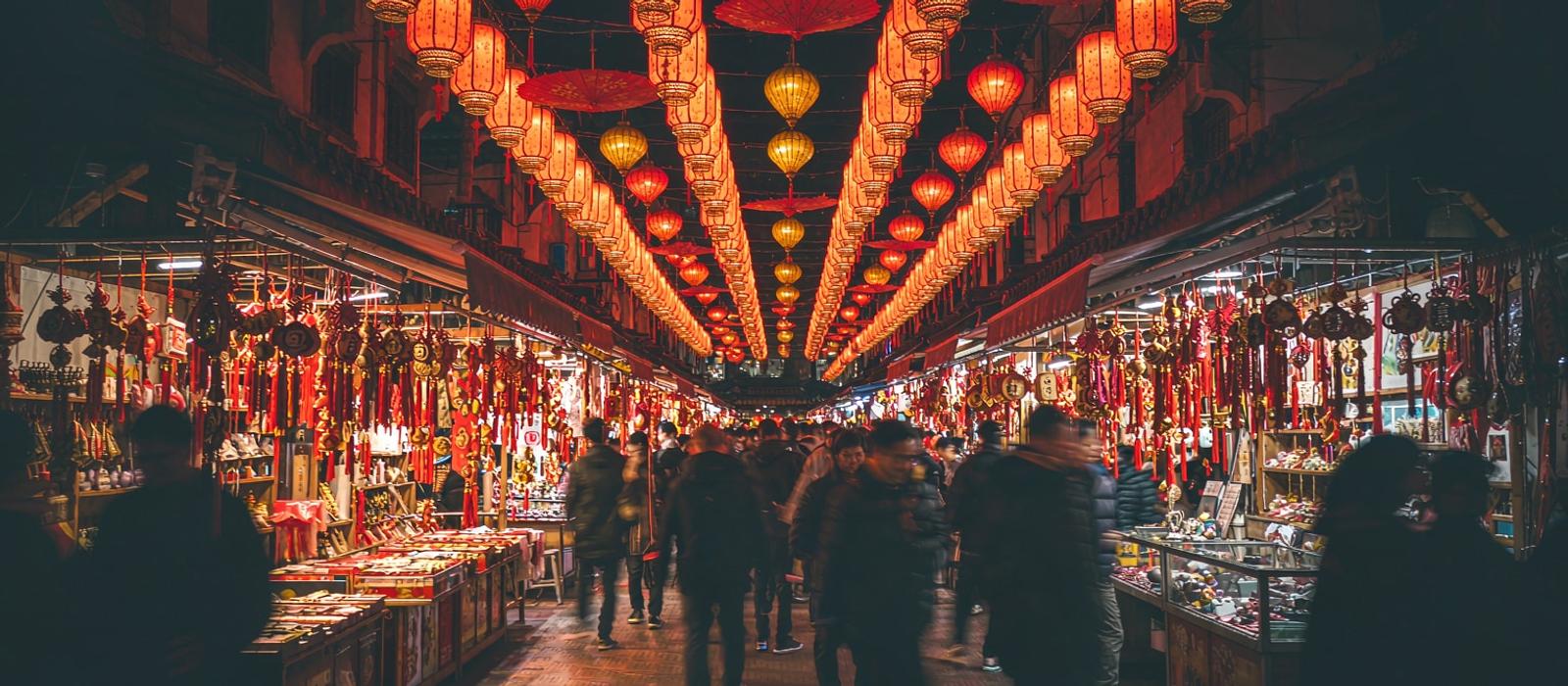
- Temples, markets and lantern displays are at their best — genuinely worth seeing
If you want the atmosphere, come for the lanterns and stay in one city rather than trying to move around. If you want efficiency, avoid the two weeks entirely.
Qingming (early April)
A three-day tomb-sweeping holiday. Families visit graves and the roads around cemeteries and suburban hills get busy. It is a quiet, family-oriented holiday otherwise — a good time to be in cities, a less good time to be on rural roads.
Dragon Boat Festival (June)
Dragon boat races on rivers and lakes, sticky rice parcels (zongzi) everywhere, one day off plus a long weekend. Regional rather than national: the racing is concentrated in the south and along major rivers. A fine time to be in Hangzhou, Suzhou or Guangdong.
Mid-Autumn Festival (September or early October)
The harvest moon festival: mooncakes, lanterns, family reunions. One of the most pleasant holidays to experience as a visitor, because the public rituals — night markets, lakeside viewing, lantern displays — happen in public space. Book hotels early; it often merges with National Day into a long break.
National Day (1–7 October)
Golden Week. Essentially the entire country travels at once, and every major attraction, train and hotel is at capacity and at peak price. We actively steer guests away from this week unless they specifically want the energy of it.
Smaller dates worth knowing
- Lantern Festival (15 days after Spring Festival) — lantern fairs, especially in Xi’an and Nanjing
- Double Ninth (ninth day of the ninth lunar month) — hill climbing, chrysanthemums
- Local temple fairs — vary by city, usually around lunar holidays
How to plan around them
Check the lunar calendar for your travel window before booking anything. If your dates collide with Spring Festival or National Day, either embrace it in one place or shift the trip by a week. The weeks immediately after each holiday are unusually quiet and often the best value of the year.
Quick answers
Questions travelers ask
Are attractions closed during Spring Festival?+
Major sights stay open and are often decorated, though some close on the first day or two. Small restaurants and family businesses are the ones that disappear.
Should I avoid China during Golden Week entirely?+
If you want quiet and value, yes. If you want festivals and city energy, it is spectacular — just book everything early and stay put.
Do hotels charge more during holidays?+
Yes, often 50–100% at popular destinations, and cancellation terms tighten. Book with free cancellation well ahead.